Coronary Artery Bypass Graft (CABG)
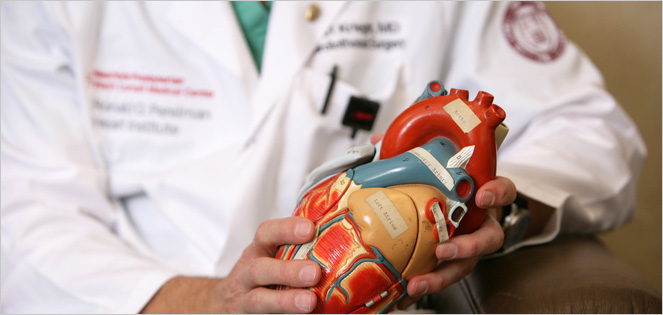
The Department of Cardiothoracic Surgery Surgeons have an extensive history of performing coronary artery bypass surgery, the most commonly performed surgical procedure for treating coronary artery disease. We achieve excellent outcomes: In 2010, the mortality rate among our CABG patients was zero. Our outcomes are consistently among the best in New York State, and exceed the national average.
We have special expertise in performing CABG in elderly patients (age 80 and older) and in those with co-existing medical conditions. Neither age nor other health conditions will restrict our ability to provide you with the best care to meet your individual needs.
During CABG, the surgeon removes a blood vessel from tissues of the chest, arms, or legs and uses it to route blood around blockages in the coronary arteries (the vessels supplying blood to the heart) to restore adequate blood circulation to the heart. We offer CABG through conventional open-heart and minimally invasive approaches.
With the minimally invasive approach, the surgeon makes a small (2-3 inch) incision between the ribs. This approach results in less chest trauma, less post-operative discomfort, shorter hospital stays, and a faster recovery time than traditional open CABG.
In many cases, CABG can be performed "off-pump" (without using the heart-lung machine). A stabilizer restricts heart movement so the surgeon can operate while the heart is beating. Patients may receive a drug to slow the heart rate, but the heart maintains its own rhythm without the assistance of the heart-lung machine. Off-pump surgery may shorten the hospital stay and recovery time and result in less bleeding, less potential for infection, and less trauma.